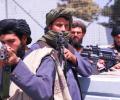
The United States, Blinken said, is committed to looking at everything done from day one through the present and draw lessons from it.

Describing India's concerns as legitimate, a top United States official has said that there is no immediate danger of foreign fighters from Afghanistan moving towards the Indian border after 2014, when American troops leave the country.

Hein Kiessling has the kind of access in Pakistan that journalists (and spies) would die for, says Kanika Datta.
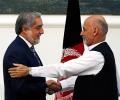
As Ashraf Ghani and Abdullah Abdullah form a joint government after contesting the presidential election against each other, Prakash Bhandari reports from Kabul on the problems facing the new, US-brokered arrangement.

The road ahead will be long and winding and much resistance can be expected from the high-flying 'hawks' in our skies. But that should not deter the policymakers from planning a road map with the 'big picture' in mind, observes Ambassador M K Bhadrakumar.
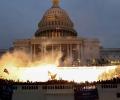
Images that capture what it was like living through 2021.

Congress leaders were in for a rude shock on Monday when the media sidelined their much-touted Jawaharlal Nehru birth anniversary event, and instead turned its full attention to Prime Minister Narendra Modi, who was addressing thousands of supporters in Sydney's Allphones Arena
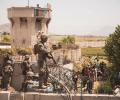
Like China, India too should connect the dots and move ahead with a long-term perspective in Afghanistan, advises Ambassador M K Bhadrakumar.

'I am committed to my country if there is respect for democracy and human rights. If not possible then I will prefer to stay in India or any other western country'

Pakistan has too much at stake to allow even an iota of rapprochement between India and the Taliban, says Vivek Gumaste.

Imran Khan knows Pakistan is holding a strong hand and doesn't have to flaunt it while claiming victory. But Pakistan has learned from the experience of the 1990s -- high risk of going out on a limb, asserts Ambassador M K Bhadrakumar.

India on Tuesday supported Afghanistan's reconciliation process with the Taliban, but warned that it must not undermine the legitimacy of the Afghan government and should be within the internationally accepted "red lines".
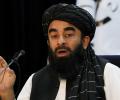
The key is to act and not wait and watch before the limited window of opportunity shuts, argues Shanthie Mariet D'Souza.

The US intends first to cripple the Afghan government financially through sanctions, freezing of assets, denial of access to international banking, etc, and then proceed to do pretty much what it wants to do with scant regard for Afghanistan's sovereignty, predicts Ambassador M K Bhadrakumar.
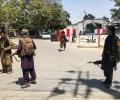
Despite dependence on the ISI for years of sustenance, Taliban leaders may harbour resentment over the ISI's excessive control, notes Rana Banerji, who headed the Pakistan desk at the Research and Analysis Wing.
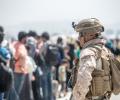
The Biden Administration on Monday said it was now focused on completing its evacuation mission from Afghanistan by August 31, the deadline for removing all American troops from the country.
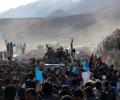
If Afghanistan is going to make any gains through democratic reforms, the newly elected president must start with addressing corruption at all levels of government and developing a comprehensive government financing plan independent of American support.

'India should think big: About how in a multi-polar world, India can indeed be one of the poles, rather than being a secondary power that has to worry about 'alignment' with one of the poles. A G3 in other words, India should look to getting others to align with itself rather than the US or China,' says Rajeev Srinivasan.

Blackmail on one side and bullying on the other doesn't make for a constructive partnership, says Sunanda K Datta-Ray.

India has sought access to Lashkar-e-Tayiba operative David Headley, the Mumbai terror attack convict now lodged in a US prison, as it insisted on bringing to justice the perpetrators of the 26/11 assault.

Seeking to reassert Jawaharlal Nehru's legacy, Congress President Sonia Gandhi said secularism is a compelling necessity for a country as diverse as India.
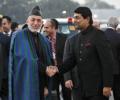
As the western forces prepare to leave Afghanistan in the coming year, India stands at a crossroads where it remains keen to preserve its interests in Afghanistan but has refused to step up its role as a regional security provider. New Delhi needs to recognise that there is no short-cut to major power status, says Harsh V Pant
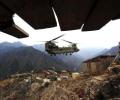
India should not have a large bilateral military training program in Afghanistan in the future because that would predictably exacerbate tensions, says Director of research, Brookings Institution Michael O'Hanlon.

"The weak don't survive, the strong survive. You make peace, alliances with the strong. You are able to maintain peace by being strong," he said.

The United States has announced the end of its 20-year-old war in Afghanistan as the last American military flight flew out of the Hamid Karzai International Airport in Kabul shortly before the August 31 deadline.
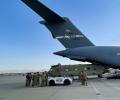
Remember the US withdrawal agreement was signed in February 2020. In the intervening period, a proper evacuation plan ought to have been in place. It was not. Consequently, tens of thousands of Afghans who had worked as interpreters, drivers, suppliers of goods and services, etc, face brutal retribution from the Taliban, Virendra Kapoor points out.

After days of speculation, Prime Minister Manmohan Singh confirmed he would meet his Pakistan counterpart Nawaz Sharif in New York, when he is expected to convey concerns over "barbaric" incidents on the LoC and continued terrorism emanating from Pakistan.

'My family goes to the airport every day so that they can find a way out.'

A confrontation with the Taliban in Kabul in this fading light of a twilight zone would have been sheer madness, observes Ambassador M K Bhadrakumar.
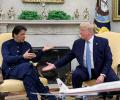
'Pakistan is determined to garner the peace dividends.' 'On the diplomatic front, this will be, principally, in terms of a revival of Pakistan's relations with the US,' notes Ambassador M K Bhadrakumar.
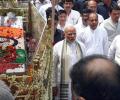
Thousands of mourners jostled and some clambered on trees to capture the moment on their phones as former prime minister Atal Bihari Vajpayee's cortege left the Bharatiya Janata Party's headquarters for Rashtriya Smriti Sthal.

'India has to ensure its borders are properly sealed and there is no infiltration from PoK.

Condemning terrorism in all its forms and manifestations, US President Barack Obama and Pakistan Prime Minister Nawaz Sharif on Thursday said that no country's territory should be used to destabilise its neighbours.
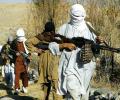
Pakistan National Security Advisor Sartaj Aziz brings to New Delhi a newfound Pakistani confidence, stemming from its leverage in Afghanistan, says Ajai Shukla
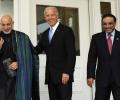
US-Pakistan relations are poised to touch a qualitatively new level under the Biden administration, notes Ambassador M K Bhadrakumar.

'The Afghans used to say that if there is any person whose name should be taken after Allah, it is Hindustani.'
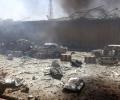
'A couple of more such happenings in the coming weeks can push Kabul into total anarchy, and a Syria-like conflict may ensue,' warns Ambassador M K Bhadrakumar.
Afghan President Hamid Karzai made a fervent appeal to international forces in Afghanistan to stay the course, because the "job is not over".
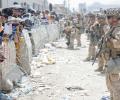
Taliban failed to honour Doha accord, never renounced Al-Qaeda: US general Mark Milley
